

The Federal Government has launched a major enforcement and clean-up operation around Lagos port corridors to reduce congestion, improve cargo movement, and strengthen Nigeria’s trade and logistics sector.
By Chisom Adaeze
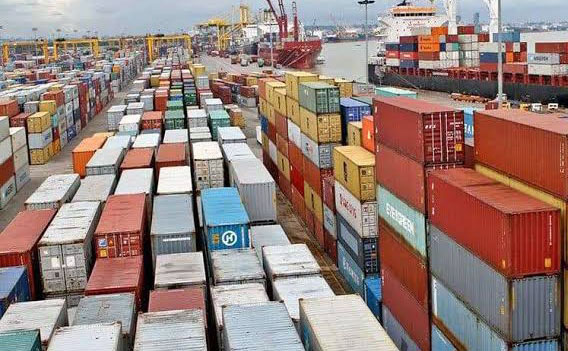
The Federal Government has commenced a large-scale clean-up and enforcement operation around the Lagos port corridors in a renewed bid to tackle the persistent congestion that has crippled trade activities and disrupted transportation in Nigeria’s commercial capital.
The operation, announced through the Presidential Enabling Business Environment Council (PEBEC), is expected to improve the movement of goods, reduce delays at the ports, and create a more efficient environment for businesses operating within the country’s maritime and logistics sectors.
For years, the Apapa and Tin Can Island port corridors have been associated with severe traffic congestion caused by indiscriminate truck parking, poor road conditions, illegal checkpoints, and delays in cargo processing. The situation has not only affected importers and exporters but has also disrupted daily life for residents and businesses within the area.
Government officials say the latest initiative will involve coordinated enforcement by multiple agencies, including traffic management authorities, security personnel, and port regulators. The clean-up exercise is expected to remove obstructions along major access roads, enforce truck movement regulations, and restore order to one of the busiest trade routes in West Africa.
According to PEBEC, improving efficiency at the Lagos ports is a critical part of Nigeria’s broader economic reform agenda. The council noted that reducing bottlenecks within the ports would significantly lower the cost of doing business, attract investment, and increase confidence among local and international traders.
Industry stakeholders have long complained about the financial losses caused by delays at the ports. Truck drivers often spend days waiting to gain access to terminals, while importers face rising demurrage charges and additional transportation costs due to congestion. Analysts say these inefficiencies contribute to higher prices for goods across the country, ultimately affecting consumers.
Business experts believe the clean-up operation could provide temporary relief if properly enforced, but they also stress the need for long-term structural reforms. Many have called for improved road infrastructure, expansion of rail freight systems, digitization of cargo clearance processes, and stronger coordination among government agencies operating within the ports.
The Lagos ports remain the backbone of Nigeria’s import and export system, handling a significant percentage of the nation’s maritime trade. Any disruption within the corridor often has ripple effects across supply chains, manufacturing, retail, and other sectors of the economy.
Residents and business owners around Apapa have also welcomed the intervention, expressing hope that the operation will ease traffic pressure and restore normal commercial activities in the area. Over the years, prolonged gridlock has negatively impacted businesses, damaged roads, and increased environmental pollution due to heavy truck presence.
Officials say monitoring teams will remain active throughout the exercise to ensure compliance and prevent a return to disorder once the initial enforcement phase ends. Authorities also hinted that additional reforms aimed at modernizing port operations could be introduced in the coming months.
As Nigeria continues efforts to improve its economic competitiveness, the success of the Lagos port clean-up operation is expected to play a major role in determining how effectively the country can manage trade, logistics, and investor confidence in the years ahead.