
Telecommunications industry stakeholders have identified unreliable electricity, frequent fibre cuts, vandalism, right-of-way challenges and multiple taxes and levies as some of the major factors affecting the quality of telecom services in Nigeria.
The concerns come despite more than $75 billion reportedly invested in the country’s telecommunications industry over the past 25 years, helping to expand connectivity and support several areas of economic activity.
Data from the Nigerian Communications Commission (NCC) showed that the four operators covered by its consumer complaint report received 413,587 complaints between January and June 2026.
The complaints included issues relating to network quality, billing, data depletion, unsuccessful transactions, airtime recharge, number portability, value-added services and SIM-related problems.
Airtel accounted for 228,992 complaints, followed by MTN with 124,405, Globacom with 56,810 and T2mobile, formerly 9mobile, with 3,885.
Of the total complaints recorded, 406,938 were resolved, representing 98.38 per cent.
Data consumption also remained a major source of complaints. The NCC recorded 23,396 complaints specifically concerning data depletion during the six-month period. MTN accounted for 12,212 of the complaints, Airtel 9,806, Globacom 1,373 and T2mobile five.
The issue has continued to generate discussions among subscribers, particularly on social media, where users frequently question how quickly their data bundles are exhausted.
Concerns over data usage have become more pronounced since the NCC approved telecom tariff increases in January 2025, with subscribers expecting greater transparency in data consumption alongside improved service quality.
The regulator and telecom operators have explained that high-definition streaming, automatic video playback, software updates, cloud backups and applications running in the background can contribute significantly to data consumption.
The NCC advises subscribers who believe their data has been wrongly depleted to first contact their network provider and obtain a complaint reference number before escalating unresolved cases to the commission.
Meanwhile, Association of Licensed Telecommunications Operators of Nigeria (ALTON) Chairman, Gbenga Adebayo, said improving network quality would require broader interventions beyond regulatory sanctions.
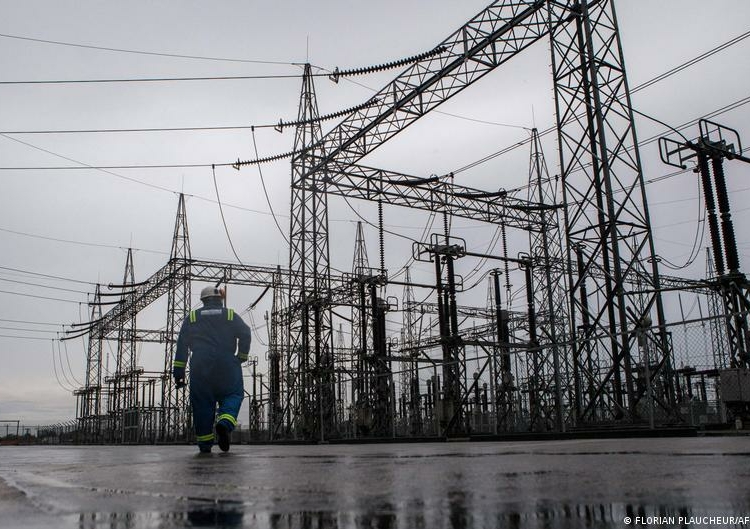
Adebayo identified unstable power supply, damage to fibre infrastructure during road construction, vandalism, theft, delays in securing rights of way and multiple taxation as factors affecting network performance.
He argued that fines and penalties alone would not resolve the underlying challenges confronting the industry.
The sector has continued to attract substantial capital expenditure. Industry estimates indicate that mobile network operators, tower companies and other infrastructure providers invested about N2.13 trillion in 2025, while approximately N1.86 trillion is projected for investment in 2026.
The funds are expected to support network expansion, technology upgrades and infrastructure resilience.
At the same time, demand for telecommunications services is increasing rapidly. NCC figures showed that internet usage reached 1.66 million terabytes in July 2026, compared with approximately 1.13 million terabytes recorded in July 2025.
The increase in traffic is putting additional pressure on fibre networks, base stations, transmission facilities, spectrum resources and data centres.
Telecommunications infrastructure now supports major parts of Nigeria’s financial services, commerce, education, transportation and other sectors, making network reliability increasingly important to economic activity.
Fibre infrastructure remains particularly vulnerable to damage from road construction, excavation and other civil works. The NCC has previously reported thousands of fibre-cut incidents, which can force operators to reroute traffic, carry out emergency repairs and replace damaged equipment.
Power supply is another major challenge. With thousands of base stations and network facilities requiring continuous electricity, operators often depend on diesel, gas, batteries and alternative energy sources when grid supply is insufficient. These additional operating costs can affect the resources available for further network expansion.
Industry players have also raised concerns about the cost and administrative requirements associated with infrastructure deployment across states.
Although the Nigerian Governors’ Forum agreed on a benchmark Right-of-Way charge of N145 per linear metre, operators have continued to highlight variations in charges and procedures in different locations.
The Federal Government is pursuing measures to address some of these infrastructure challenges. Among them is Project BRIDGE, an initiative of the Ministry of Communications, Innovation and Digital Economy aimed at expanding open-access fibre infrastructure and improving connectivity.
The NCC has also increased its monitoring of network performance, assessing factors including speed, stability, responsiveness and differences in service quality across regions.
However, telecom stakeholder Teju Abolade said additional infrastructure would not resolve every complaint, particularly those arising from limited understanding of how applications consume mobile data.
Abolade called for stronger consumer education to help subscribers understand how background applications and other digital services affect data usage.
He urged the NCC, operators and other stakeholders to make greater use of traditional and digital media to educate consumers and reduce avoidable disputes.
The Executive Secretary of the West Africa Telecommunications Regulators Assembly (WATRA), Aliyu Yusuf Aboki, said the industry should increasingly measure its progress by the economic and social opportunities enabled by telecommunications rather than subscriber numbers alone.
Economist and Managing Director of Financial Derivatives Company, Bismarck Rewane, similarly described telecommunications as critical economic infrastructure, noting its growing role in banking, healthcare, education, transportation, commerce and other sectors.
As digital payments, e-commerce, cloud services, artificial intelligence and remote operations continue to expand, disruptions to telecom networks increasingly affect businesses and consumers beyond the telecommunications industry.
The challenge for the sector, therefore, extends beyond attracting fresh investment. Protecting existing infrastructure, sustaining capital expenditure and ensuring that network investments translate into dependable connectivity remain key issues for Nigeria’s digital economy.
Poor Telecom Service: Operators Cite Power, Fibre Cuts, Multiple Levies