


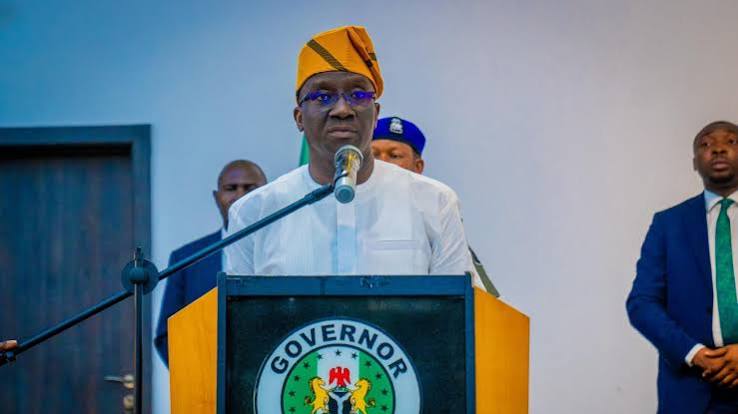
Edo State Governor, Monday Okpebholo, has reaffirmed his administration’s commitment to improving the welfare of women and girls through expanded access to education, healthcare, vocational training and protection from abuse.
The governor made the pledge in a message marking the International Day of the Girl Child, assuring residents that his government would continue to introduce programmes aimed at improving the safety, economic independence and development opportunities available to women and girls across the state.
Okpebholo said investing in girls was essential to Edo State’s long-term development, stressing that every girl should have access to quality education, adequate healthcare and opportunities to realise her potential.
He noted that supporting girls to remain in school, stay healthy and live in safe environments would help prepare them for future leadership roles in families, businesses and public institutions.
The governor also highlighted efforts to increase women’s participation in different sectors of the economy, particularly through vocational training and skills development.
As part of these initiatives, 50 women recently completed a training programme in compressed natural gas (CNG) vehicle conversion. The programme was described by the governor as the first specifically designed to train female mechanics.
Okpebholo said his administration intended to create more opportunities for women to work in traditionally male-dominated occupations. These efforts include initiatives to support women interested in commercial tricycle operations, commonly known as Keke NAPEP, alongside other empowerment programmes planned on a quarterly basis.
On the protection of girls, the governor highlighted programmes introduced through the Office of the First Lady, including the Pad a Girl initiative and the SHINE Agenda. He also pointed to the state’s laws addressing violence against persons as part of efforts to promote safety and protect vulnerable residents.
The administration is also working to improve maternal healthcare and reduce the risks women face during pregnancy and childbirth.
Okpebholo said access to safe delivery services should be available to women in every community, adding that the government was taking steps to strengthen maternal healthcare across Edo State.
According to the governor, skilled birth attendants have been engaged in primary healthcare centres, while the Edo State Health Insurance Scheme has supported more than 674 childbirths.
He further noted that the Edo Specialist Hospital secured full accreditation for obstetrics and gynaecology residency training in July 2026. The state also launched its Maternal, Newborn and Child Health Week in June as part of efforts to improve healthcare for mothers and children.
Despite these interventions, Okpebholo acknowledged that further action was needed to keep girls in school and protect them from abuse and other threats to their well-being.
He called on parents, traditional rulers and community leaders to work with the government, emphasising that protecting girls required collective responsibility beyond government policies and programmes.
The governor concluded by reaffirming his administration’s commitment to advancing the dignity, safety and economic prospects of women and girls in Edo State as the state marked the International Day of the Girl Child.