


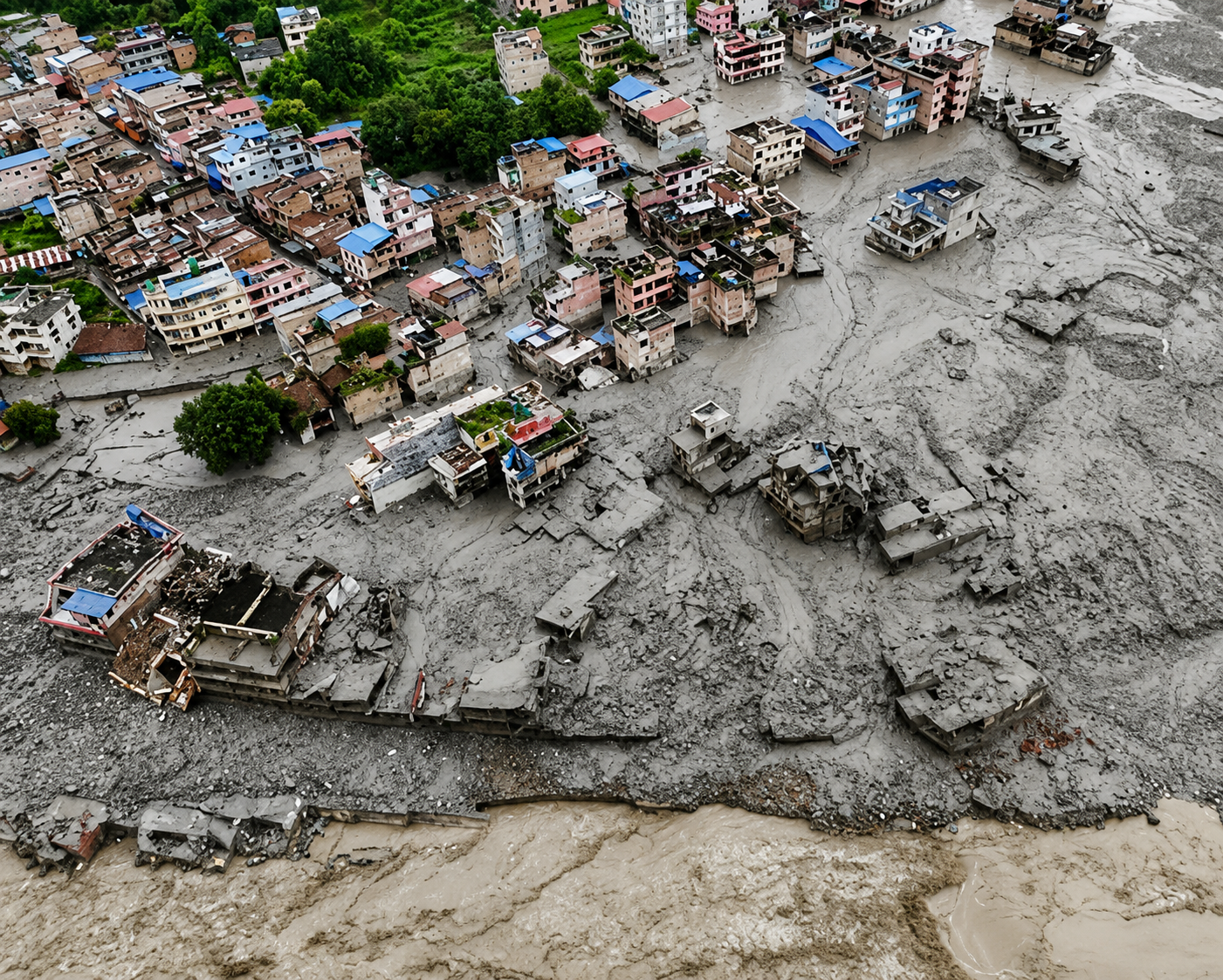
More than 350 people have been killed in Nepal after catastrophic flash floods swept through communities along the Nepal-China border, while authorities and experts warn that further flooding, landslides and mudslides could worsen the disaster.
More than 1,300 people are reported missing following the flooding, with at least 700 foreigners among those unaccounted for. Search-and-rescue operations have been severely hampered by damaged infrastructure, poor connectivity, power outages and limited resources in the affected mountainous areas.
The floods struck on Wednesday after extreme weather caused torrents of water to surge through settlements, destroying homes, roads and bridges. Footage from the region showed powerful floodwaters moving through villages and carrying away infrastructure.
The United States Geological Survey said a glacial collapse contributed to the disaster. A glacial collapse occurs when a large section of ice breaks away from a glacier and rapidly descends a slope, potentially releasing enormous quantities of water and debris.
Authorities are now facing a secondary threat. Landslides have reportedly blocked waterways and created a new lake, raising concerns that unstable accumulations of earth and debris could suddenly fail and unleash another wave of water downstream.
China’s state media has warned that the situation could become more dangerous, with additional rainfall expected during the monsoon season. Three more days of rain could increase the pressure on unstable slopes and newly formed natural dams, heightening the risks of flash floods and mudslides.
The mountainous terrain is complicating rescue efforts, with damaged roads and bridges making it difficult for emergency teams to reach isolated communities. Disrupted communications and electricity have also made it harder to establish the whereabouts of missing residents and visitors.
The large number of foreigners reported missing has added another dimension to the emergency, although authorities are still working to verify the figures and identities of those unaccounted for.
Rescue teams are continuing to search affected communities while authorities monitor water levels, unstable slopes and areas where landslides have altered natural drainage channels.
The disaster highlights the vulnerability of Himalayan communities to sudden floods and landslides during the monsoon period, when heavy rainfall can rapidly destabilize steep mountain terrain.
Officials face the immediate challenge of locating survivors and recovering victims, while also preventing further loss of life from secondary flooding, landslides and mudslides as wet weather continues across already devastated and isolated mountain communities.