


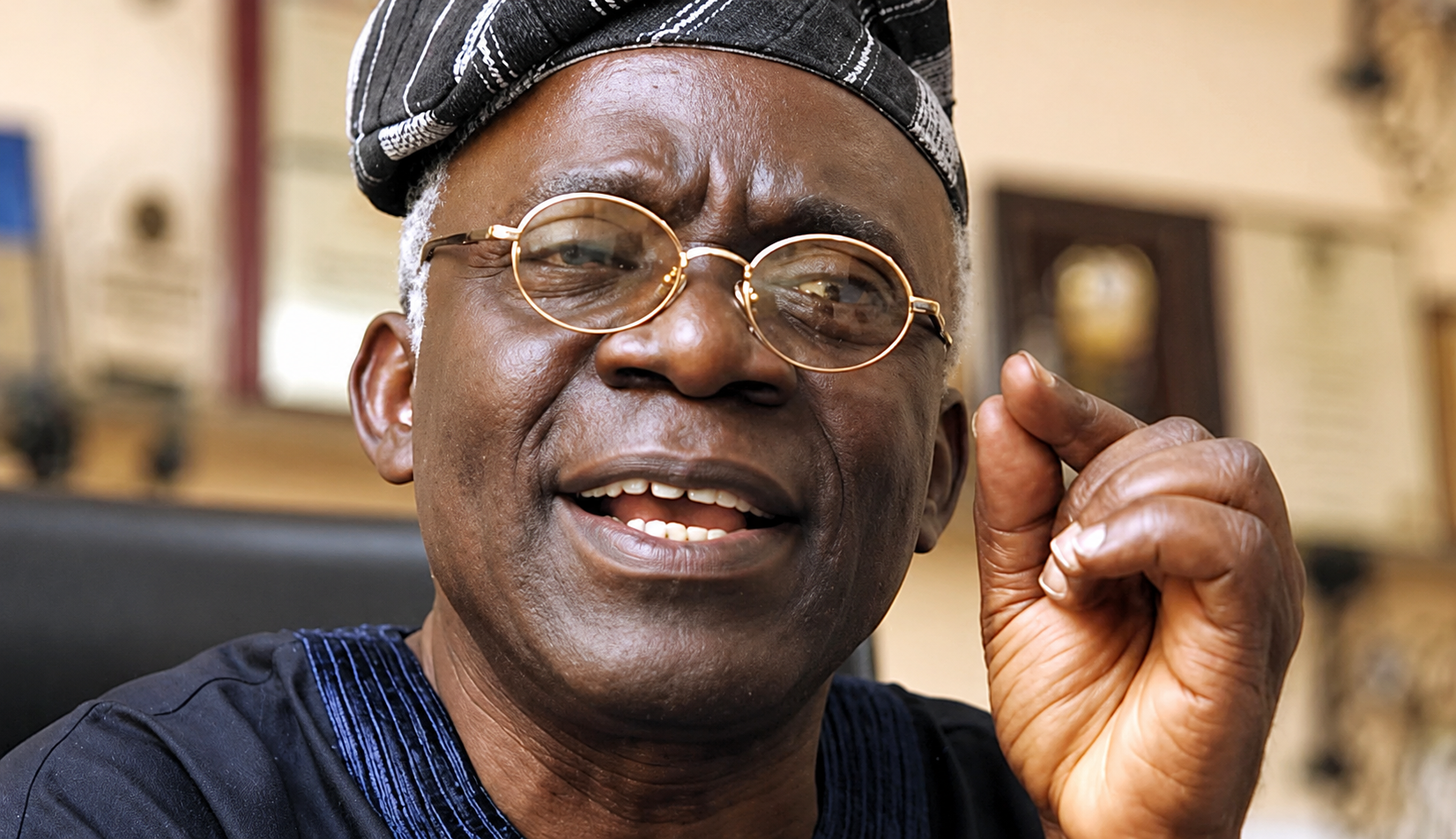
Human rights lawyer and Senior Advocate of Nigeria (SAN), Femi Falana, has called on the Federal Government to make affordable housing accessible to all Nigerians, insisting that decent shelter is a constitutional right and not a privilege reserved for a few.
Falana made the remarks on Thursday while speaking at the Africa International Housing Show (AIHS) in Abuja, where he argued that housing is fundamental to citizens’ security, welfare and dignity.
According to him, the Nigerian Constitution places the responsibility of ensuring the security and welfare of citizens on government, a responsibility he said cannot be fulfilled if millions of Nigerians remain homeless.
“Under the Nigerian Constitution, every citizen shall be housed. We start with security and welfare, which is the primary responsibility of government. You cannot be secured if you have no house, if you are homeless,” Falana said.
The senior lawyer lamented that although the Constitution recognises housing as a key component of citizens’ welfare, the provision remains largely unenforceable, making it difficult for ordinary Nigerians to seek legal remedies when governments fail to provide adequate housing.
He urged authorities to adopt policies that prioritise affordable housing for low- and middle-income earners instead of focusing public resources on luxury housing projects.
Falana argued that government housing programmes should promote equality and social inclusion rather than favour wealthy individuals and politically exposed persons.
“Government has abandoned the poor while efforts are regularly made to take care of the rich. Public funds should not be used to build houses for the wealthy instead of encouraging them to access mortgages,” he said.
Falana also advocated reforms to Nigeria’s housing sector, calling for stronger institutions capable of delivering mass housing across the country.
He urged the Federal Government to improve the operations of the Federal Mortgage Bank of Nigeria (FMBN) and revive public housing initiatives that would make home ownership more accessible.
The SAN further recommended greater involvement of government engineers and public institutions in housing construction, arguing that overdependence on contractors has increased project costs.
“The business of contractocracy—government of contractors, by contractors and for contractors—must stop,” he said.
Falana also condemned the demolition of informal settlements without adequate resettlement plans, urging governments at all levels to provide alternative accommodation before displacing residents.
He maintained that development projects should not come at the expense of vulnerable communities.
In addition, he called for policies that would reduce the cost of building materials through local production and greater collaboration with private investors developing affordable housing technologies.
According to him, expanding local manufacturing and supporting innovation in the construction industry would help reduce housing costs and bridge Nigeria’s growing housing deficit.
Housing experts estimate that Nigeria faces a housing shortage running into millions of units, with rising construction costs, inflation and rapid urbanisation making home ownership increasingly difficult for many citizens.