


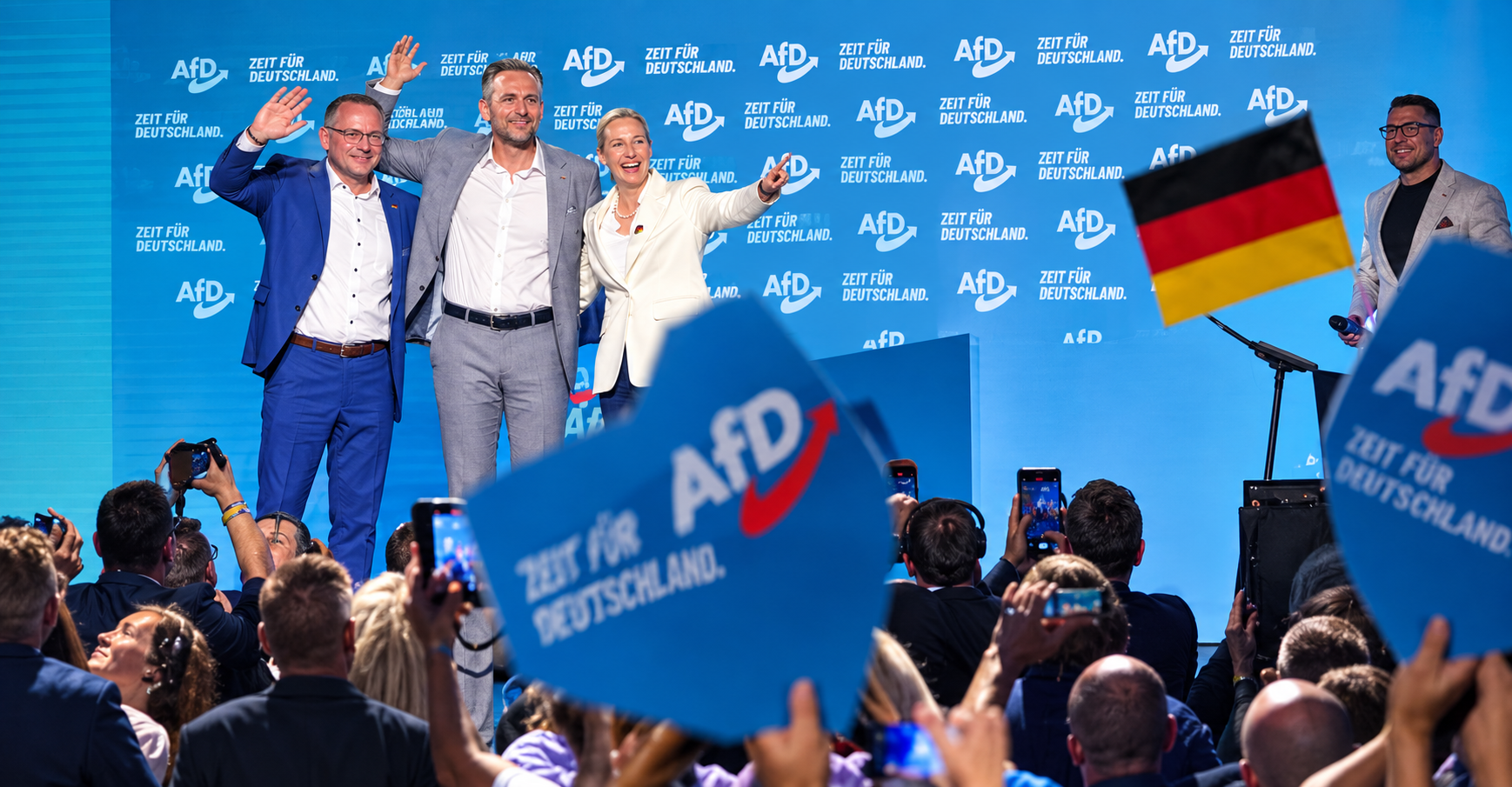
Germany’s far-right Alternative for Germany (AfD) has recorded a landmark victory in the eastern state of Saxony-Anhalt, emerging well ahead of Chancellor Friedrich Merz’s Christian Democratic Union (CDU) and intensifying debate over the country’s political direction.
Preliminary results put the AfD at 43.8 per cent, translating into about 39 seats in the 83-member state parliament. The CDU secured roughly 17.2 per cent, representing a dramatic decline from its previous performance. Although the AfD achieved its strongest showing in the state, it remains three seats short of the 42 required for an outright majority.
The result places Ulrich Siegmund, the party’s 35-year-old state leader, at the centre of negotiations over the next administration. Celebrating supporters in Magdeburg, Siegmund described the outcome as “sensational,” arguing that voters had given his movement a mandate to govern.
No far-right party has controlled a German state since the end of World War Two. A successful AfD administration would therefore mark a major break with Germany’s postwar political tradition and potentially give the organisation influence over policing, education and cultural affairs.
Germany’s domestic intelligence agency has classified the AfD’s branch in Saxony-Anhalt as right-wing extremist, a designation party officials have rejected. Mainstream political groups have maintained a longstanding “firewall” against cooperation with the organisation, refusing coalition arrangements or policy partnerships.
That position could complicate Siegmund’s path to power. The AfD fell short of the seats needed to govern alone, while rival parties struggle to form a coalition capable of defeating it. The left-wing populist BSW, which won enough support to enter parliament, could become significant because of its positions on migration and Russian energy.
Siegmund has rejected a coalition with the BSW, while national co-leader Tino Chrupalla indicated that the party remained willing to engage with other political forces. Siegmund has also warned that another election could become necessary if negotiations fail.
The defeat has meanwhile placed Merz under fresh pressure. The CDU lost approximately half of its previous support in the state, raising questions about public confidence in his leadership.
AfD co-leader Alice Weidel seized on the result to demand Merz’s removal and suggested Germany could face federal elections before Christmas.
The vote has also attracted international attention. US President Donald Trump highlighted the projection online, while Russian presidential envoy Kirill Dmitriev welcomed the outcome. Polish Prime Minister Donald Tusk, however, sharply condemned celebrations surrounding the AfD’s advance.
The Saxony-Anhalt result now stands as a significant test for Germany’s political establishment and its ability to contain the far-right’s growing electoral appeal.