


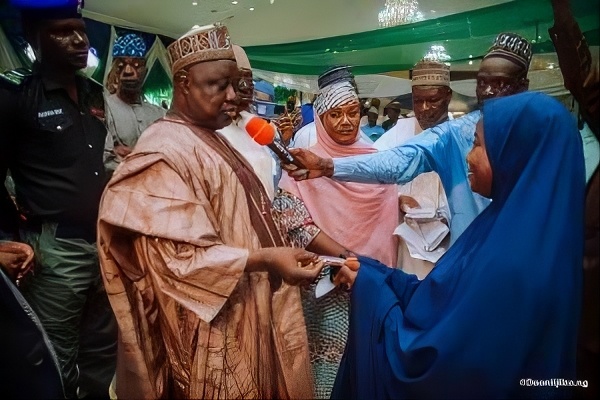
The Yahaya Sarki Foundation has provided ₦4 million in cash assistance to 200 vulnerable residents of Nasarawa II Ward in Birnin Kebbi, Kebbi State, as households continue to grapple with rising living costs.
The initiative, implemented this week, was led by the Yahaya Sarki Foundation and a senior aide to the Kebbi State Governor. The beneficiaries were drawn from vulnerable households in the community, including elderly residents, women and youths facing financial difficulties.
Each beneficiary received cash assistance aimed at helping cover essential needs, including food, medical expenses and other household necessities. Although the total amount represents a relatively small intervention compared with government budgets, its significance for families facing daily financial constraints could be considerable.
Nigeria’s prolonged inflationary environment has continued to weaken household purchasing power, leaving many low-income communities struggling to meet essential needs. In such circumstances, grassroots assistance can provide temporary relief for people who may otherwise be unable to afford necessities.
The Birnin Kebbi initiative also highlights an ongoing debate over the effectiveness of cash-based interventions. While critics maintain that one-off payments cannot resolve the structural causes of poverty, supporters argue that immediate assistance remains essential during periods of acute economic pressure.
For families confronting food insecurity or unaffordable medical expenses, long-term economic reforms may offer little immediate comfort. Immediate assistance can provide temporary relief while broader policies designed to improve living conditions are implemented.
The foundation’s involvement further reflects growing expectations that political actors and public office holders should maintain close relationships with communities beyond their official responsibilities. Increasingly, citizens judge leadership not only by policies announced in government offices but also by visible efforts to respond to difficulties experienced at the grassroots.
However, sustainable progress will require more than periodic donations. Kebbi State faces the broader challenge of creating opportunities that allow vulnerable residents to build reliable sources of income. Investment in agriculture, vocational training, education, small businesses and local industries could provide pathways toward greater financial independence.
Such measures would help shift communities from dependence on charitable assistance toward productive economic participation. Well-designed social protection schemes can reinforce these measures by assisting vulnerable families while helping them access opportunities that promote long-term financial independence.
For the 200 beneficiaries in Nasarawa II Ward, the ₦4 million intervention offers immediate assistance during a difficult period. However, the development also highlights that reducing poverty demands a combination of grassroots assistance and lasting government policies that expand jobs, strengthen productivity and raise household earnings.
As economic pressures persist, combining emergency relief with long-term empowerment may offer a stronger foundation for resilience across Birnin Kebbi and other vulnerable communities.