
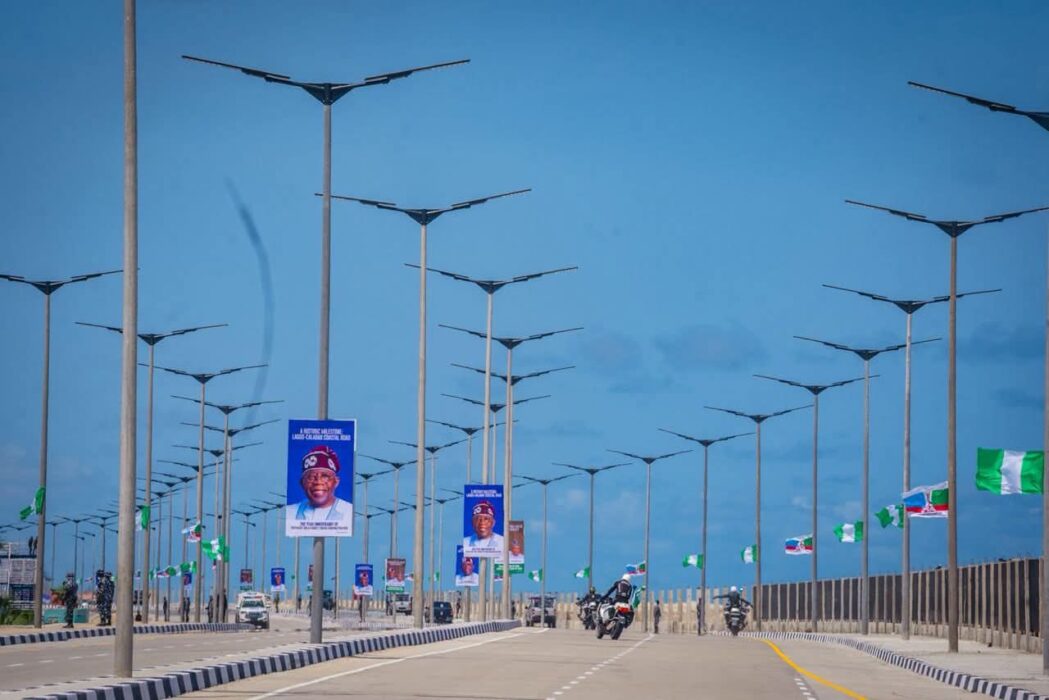
The Presidency has dismissed claims that President Bola Tinubu ordered the abandonment of sections of the Lagos-Calabar Coastal Highway, insisting that the entire 750-kilometre project will be completed as originally planned.
The clarification followed controversy over the proposed reconstruction of parts of the existing East-West Road in the Niger Delta, which raised concerns that some states and coastal communities could be excluded from the coastal highway project.
In a statement published on its official X account on Tuesday, the Presidency said the President had not directed that the coastal highway be discontinued from Edo State and redirected through the East-West Road.
Instead, it explained that the proposed reconstruction of 400 kilometres of the East-West Road, stretching from Edo State to Cross River State, was an additional infrastructure project that would run alongside the coastal highway.
According to the statement, the East-West Road has suffered significant pavement damage and is vulnerable to flooding, making its reconstruction necessary to improve road conditions and address the effects of climate change.
The Presidency maintained that the additional project would not affect the construction of the entire Lagos-Calabar Coastal Highway or alter its original alignment.
The controversy arose after the Minister of Works, David Umahi, said Tinubu had directed that the highway’s continuation through parts of the Niger Delta should use the existing East-West Road corridor rather than follow a new route.
The comments prompted questions about the project’s final alignment and whether all the states originally included in the plan would benefit.
However, the Presidency said construction was progressing on several sections of the highway, including Sections 3A and 3B in Cross River and Akwa Ibom states, covering 75 kilometres of dual carriageway.
It also listed Sections 4A and 4B in Ogun and Ondo states, covering 65 kilometres, as well as Section Five in Akwa Ibom State, covering 62 kilometres.
The government added that surveying and design work was continuing on the remaining sections, extending from the end of the Ondo axis through Edo, Delta, Bayelsa and Rivers states before connecting with Section Five in Akwa Ibom.
It said procurement and construction would begin on the outstanding sections after the survey and design work had been completed, starting from the end of the Ondo axis.
To support its position, the Presidency cited the administration’s decision to expand the Akwanga-Jos-Bauchi-Gombe-Biu-Maiduguri highway project by approving an additional 410-kilometre Wukari-Langtang route.
According to the statement, the additional route increased the project’s planned length from 700 kilometres to 1,100 kilometres without changing its original alignment.
The government said the same approach would apply to the coastal highway, maintaining that additional road projects would not interfere with the original plans for ongoing infrastructure developments.
The Lagos-Calabar Coastal Highway is designed to connect Lagos with Calabar through Ogun, Ondo, Edo, Delta, Bayelsa, Rivers and Akwa Ibom states.
The Presidency urged Nigerians to disregard reports suggesting that the administration intended to abandon parts of the project, reaffirming its commitment to completing the highway as planned.