

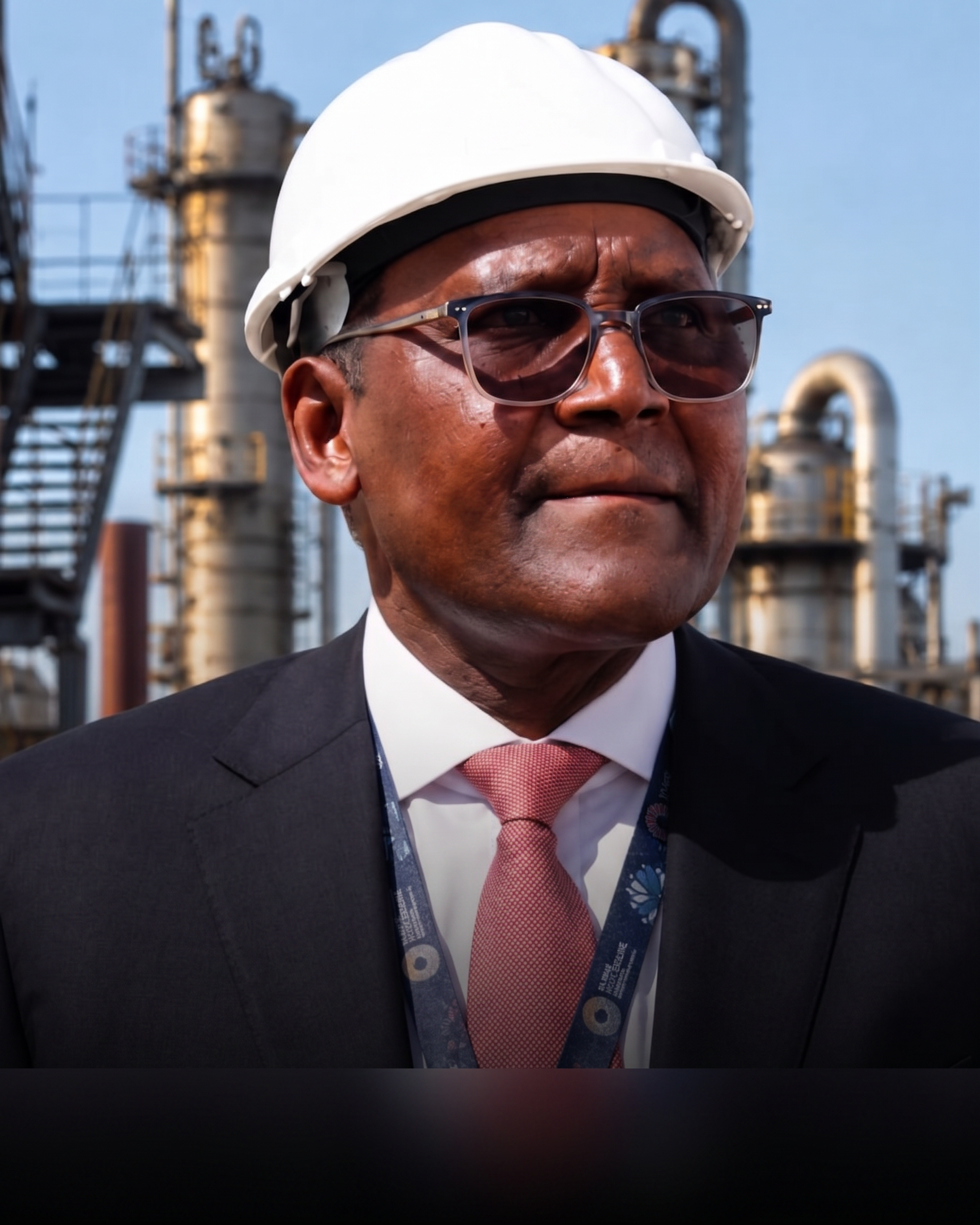
Nigerian industrialist Aliko Dangote has reaffirmed plans to complete his proposed oil refinery in Kenya by 2030, despite protests by some residents and concerns raised over the project’s environmental impact.
Dangote and Kenyan President William Ruto recently performed the groundbreaking ceremony for the $16 billion Lamu refinery on Kenya’s northern coast.
The project is expected to have a processing capacity of 700,000 barrels of crude oil per day, which would make it the largest refinery in East Africa by capacity and one of Kenya’s biggest infrastructure investments since independence.
Leaders from Uganda, Ethiopia, Togo and Benin also attended the groundbreaking ceremony.
Dangote said the project represented a wider effort to deepen African industrial cooperation and reduce the continent’s dependence on exporting raw materials without adding value locally.
He referenced his refinery in Nigeria, which has a similar planned processing capacity, saying its development demonstrated that large-scale refining projects could be successfully delivered in Africa.
The proposed refinery has faced opposition from some residents of Lamu, with concerns particularly focused on land compensation and possible environmental consequences.
A group of 133 residents has reportedly approached Kenya’s High Court seeking to halt construction activities on disputed land.
Court proceedings have restricted excavation and construction work on the contested site pending the next hearing scheduled for October 14.
Dangote, however, disputed claims surrounding the land compensation issue, saying the project only occupies the portion of land made available for its development.
He also dismissed the protests as opposition from some local and international interests, maintaining that construction would proceed according to plan.
Meanwhile, Walid Ali, co-founder of the Save Lamu campaign group, said residents wanted access to the findings of the project’s environmental impact assessment and details of proposed measures to address potential risks.
Dangote said the refinery could generate about 60,000 jobs at the peak of construction, with wider economic benefits expected through businesses and industries that emerge around the project.
The refinery is also expected to have a 1,000-megawatt power plant, which will provide electricity for the facility and potentially support other industrial activities in the area.
Dangote has identified unreliable electricity supply as one of the major challenges limiting industrial development across Africa.
The businessman has several projects planned across the continent and has outlined ambitions to develop up to 10,000 megawatts of power generation capacity in Africa by 2030, with the possibility of increasing the figure depending on demand.
Questions have also been raised over locating a major refinery in Kenya, a country that does not currently produce crude oil on the scale of major oil-producing nations.
Kenya’s Energy and Petroleum Minister, Opiyo Wandayi, said the refinery would not necessarily depend on crude produced within the region because refineries can purchase crude from international markets.
Dangote similarly cited Singapore, which does not produce crude oil but has developed a major refining industry, as an example of how a country can operate a refinery using imported crude.
The Kenyan refinery is expected to increase domestic refining capacity and could potentially contribute to fuel supply stability. However, the eventual impact on pump prices will also depend on international crude oil prices and other costs across the supply chain.
The Lamu project would become Dangote’s largest proposed investment outside Nigeria.
His Nigerian refinery currently has a 700,000-barrel-per-day capacity, and Dangote has announced plans to expand its capacity after raising funds through a share offering.