

The Federal Government has renewed its drive to deploy one million compressed natural gas (CNG)-powered vehicles across Nigeria as part of efforts to reduce transportation costs and ease the financial burden on commuters.
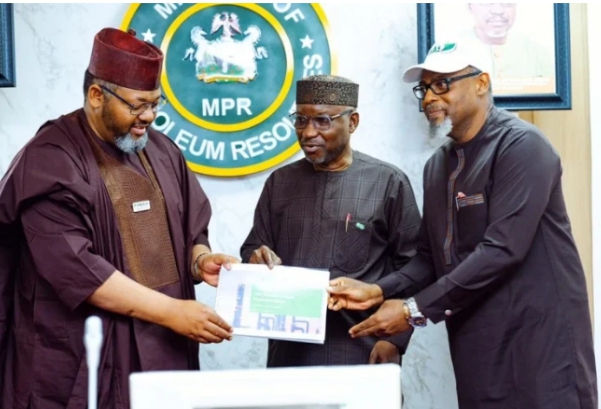
The Minister of State for Petroleum Resources (Gas), Ekperikpe Ekpo, gave the directive in Abuja over the weekend while receiving progress reports from the Presidential Initiative on Compressed Natural Gas and Electric Vehicles and the Decade of Gas Secretariat.
Ekpo urged the two bodies to accelerate investments in CNG refuelling stations, vehicle conversion centres and other critical infrastructure needed to expand the use of natural gas as an alternative fuel for transportation.
According to a statement issued on Sunday by the minister’s spokesman, Louis Ibah, the minister emphasised the need to ensure that the government’s autogas policy delivers practical benefits to Nigerians, particularly through reduced transport fares following the removal of the petrol subsidy in 2023.
The renewed initiative comes amid persistent increases in transportation costs, as commercial transport operators continue to contend with high fuel expenses and other operating costs.
The Federal Government has promoted CNG as a more affordable alternative to petrol, with the potential to lower vehicle operating expenses. However, the extent to which the transition will reduce fares depends on the availability of refuelling facilities, affordable vehicle conversions, reliable gas supply and the willingness of transport operators to pass savings on to passengers.
Ekpo said Nigeria’s abundant natural gas reserves presented an opportunity to reduce transportation expenses, increase domestic gas utilisation and stimulate economic growth.
“Nigeria is a gas nation with a gas reserves index of over 80 yrs, and that is why we are talking about the Decade(s) of Gas,” he said.
The minister reaffirmed the government’s commitment to President Bola Tinubu’s directive to make transportation more affordable through CNG adoption, assuring the agencies involved of continued support.
“It is important that we listen to the directive of Mr President to make transportation cheaper via CNG. We will continue to give you all the backing to provide the necessary assistance to make sure we drive this project to a logical conclusion,” Ekpo said.
He urged the Presidential Initiative on CNG and Electric Vehicles and the Decade of Gas Secretariat to sustain efforts to expand infrastructure and strengthen programmes that would encourage more motorists and commercial transport operators to switch to gas-powered vehicles.
Ekpo also commended progress recorded under the current leadership of the Presidential Initiative on CNG and Electric Vehicles, reiterating the government’s readiness to support the programme.
He further disclosed that Nigeria’s domestic gas consumption had exceeded two billion cubic feet per day for the first time in the country’s history, describing the development as an opportunity to deepen gas utilisation and advance national economic objectives.
The chairman of the Presidential Initiative on CNG and Electric Vehicles, Ismaeel Ahmed, said the initiative would intensify investments and programmes aimed at expanding refuelling infrastructure and increasing the number of vehicles converted to run on CNG.
Ahmed explained that the initiative was designed to improve access to the alternative fuel for transport operators and help reduce fares for millions of Nigerians.
He added that a joint industry market study conducted by the Decade of Gas Secretariat had provided a framework for accelerating implementation, monitoring progress, identifying infrastructure gaps and determining priority interventions.
According to him, the findings would guide government agencies and industry stakeholders in addressing challenges that could hinder the nationwide adoption of CNG.
Similarly, the coordinator of the Decade of Gas Secretariat, Ed Ubong, described CNG as an important component of Nigeria’s energy transition, pledging continued support for the presidential initiative.
Ubong said the secretariat would continue to promote domestic gas consumption and export utilisation while creating opportunities for investment and economic development.
The Federal Government introduced the CNG programme to cushion the impact of petrol subsidy removal by encouraging motorists and transport operators to adopt alternative fuels. The initiative includes vehicle conversion support, the development of refuelling stations and the expansion of gas distribution infrastructure.
However, meeting the one-million-vehicle target will require sustained investment, reliable gas supply and effective coordination among government agencies, gas suppliers, conversion centres and transport operators.
The success of the programme will ultimately depend on how effectively increased CNG adoption translates into lower operating costs and more affordable transportation for Nigerians.