

Geometric Power’s electricity distribution network in Aba, Abia State, is improving power supply for businesses, educational institutions and households, helping some customers reduce their reliance on petrol and diesel generators.
The development is offering a different experience in a country where unreliable electricity has continued to raise production costs, disrupt business operations and place additional financial pressure on households.
Through its Aba Power distribution network, Geometric Power is providing electricity to parts of the commercial hub, allowing some manufacturers to extend production hours, traders to operate for longer periods and residents to manage household expenses more efficiently.
The chairman of Geometric Power, Professor Barth Nnaji, described the Aba Integrated Power Project, which represents an investment of more than $900 million, as the fulfilment of a long-standing vision.
Nnaji said the company was committed to delivering reliable and affordable electricity to customers across different social and economic groups.
“Our services are for all people, regardless of class or status. Electricity is a fundamental right of the Nigerian people, and we are happy to provide reliable and affordable electricity to all our customers,” he said.
He also stated that Aba Power was entirely privately owned and had not received subsidies from the Federal Government, distinguishing it from legacy electricity distribution companies.
The Group Managing Director of Geometric Power, Agatha Nnaji, attributed the project’s eventual completion to a $50 million financing facility provided by the African Export-Import Bank (Afreximbank) after years of delays.
She explained that the project experienced prolonged setbacks arising from political interference, administrative challenges and disputes surrounding the privatisation process.
According to her, the company spent seven years maintaining already-installed facilities while continuing to pay workers, even as the project remained unable to commence full operations.
She said efforts to resolve the outstanding issues received attention under former President Goodluck Jonathan, while his successor, the late President Muhammadu Buhari, directed his administration to address the challenges associated with the privatisation arrangement.
Nnaji said Afreximbank’s intervention provided the funding needed to complete and commission the project, adding that the bank recognised Aba’s potential as a major industrial centre in Africa.
She described the financing as particularly significant because the project had faced difficulties that could have discouraged other investors.
Geometric Power said its investment in electricity distribution infrastructure was designed to improve network stability and minimise disruptions.
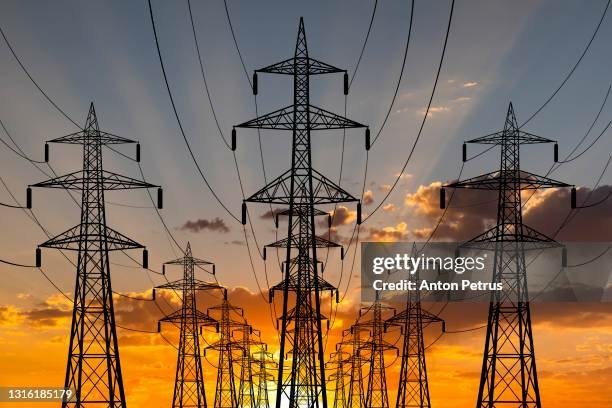
The company’s Director of Commercial Operations, Engineer Victor Ngwoke, said Aba Power had installed heavy-duty tubular steel poles to strengthen its distribution network and withstand harsh conditions.
He explained that the poles were supported by deeply buried concrete foundations and designed to withstand significant impact, including collisions involving vehicles.
Ngwoke added that the company maintained standards for conventional concrete poles and worked to restore damaged infrastructure when faults occurred.
On metering, he disclosed that approximately 98 per cent of Aba Power customers had prepaid meters, allowing consumers to monitor their electricity usage and manage their expenses while reducing disputes associated with estimated billing.
He also said the company deployed smart meters and monitoring teams to identify electricity theft, including illegal connections and meter bypasses.
According to him, some residents have supported efforts to protect the network because of the benefits reliable electricity brings to their businesses and livelihoods.
The company currently draws an average of 50 to 60 megawatts from an installed generation capacity exceeding 140 megawatts, according to its management.
Geometric Power said the available capacity had enabled it to extend electricity supply to some communities in neighbouring Rivers State, including areas where residents have experienced inadequate service from the Port Harcourt Electricity Distribution Company.
The company also expressed its intention to expand electricity access across Abia State, subject to the required infrastructure and operational arrangements.
Ogbonnaya Onu Polytechnic, Aba, is among the institutions benefiting from the improved electricity supply.
The institution’s rector, Professor Christopher Okoro, said access to more reliable power had improved academic, research and administrative activities since the institution was connected to Aba Power.
Okoro, who assumed office in 2024, explained that one of the major challenges he encountered was a substantial outstanding diesel bill, which he considered unsustainable.
He subsequently approached Nnaji for assistance, and the institution was connected to the network within 48 hours.
According to the rector, unreliable electricity had previously affected academic activities and forced staff to leave the campus as early as 2 p.m., limiting research and other essential work.
He said the improved supply had allowed students and staff to remain on campus until late in the evening, despite the institution not operating as a residential school.
“Before now, staff used to leave by 2pm. They cannot work without electricity. You cannot carry out research without electricity,” Okoro said.
He added that the institution’s energy expenses had dropped by approximately 80 per cent following the connection.
Manufacturers in Aba have also reported operational benefits from the improved electricity supply.
The chairman of Damson Industries, a manufacturer of shoe components, David Mmadueke, said the company could now operate day and night shifts without regularly shutting down because of power outages.
He noted that the factory experienced a disruption lasting about three days due to a gas supply problem but said electricity shortages had otherwise not forced the company to suspend operations.
At Aba North Shoe Plaza, which houses more than 2,000 shops, the president, Obioma Onyebuchi, said traders switched to Aba Power on January 14 and had since experienced more consistent electricity supply.
Onyebuchi said the arrangement had reduced the need for individual petrol and diesel generators, with customers connected to metered electricity.
“With the constant electricity supply from Aba Power, we can now work throughout the day. This has increased the productivity of our members,” he said.
Although some traders consider the electricity tariff expensive, he maintained that the cost compared favourably with the money previously spent on fuel to operate generators.
He also expressed the traders’ willingness to support efforts to sustain the improved supply.
The reported benefits extend beyond commercial and industrial activities to household management.
Ada-Ngizi Greg-Ilobinso, a teacher and mother, said the availability of steady electricity had made it easier to preserve food, plan household spending and reduce frequent trips to the market.
She explained that reliable power allowed her to buy food in larger quantities and store it in a freezer, helping her manage household needs more efficiently.
“Aba Power has really affected my life positively in so many ways. As a mother and a wife, and also as a housekeeper, a house manager, if I may say, it has really helped me because now we have steady light,” she said.
The experiences reported by businesses, institutions and households highlight the potential economic benefits of more dependable electricity in Aba, particularly for a city with a strong manufacturing and trading base.
However, sustaining these gains will depend on the consistency of power supply, affordable tariffs, reliable gas availability and the company’s ability to extend its services to more communities.
For Aba’s businesses and residents, the long-term significance of the project will be measured not only by improved electricity access but also by its ability to lower operating costs, support productivity and strengthen the city’s position as an industrial centre.