
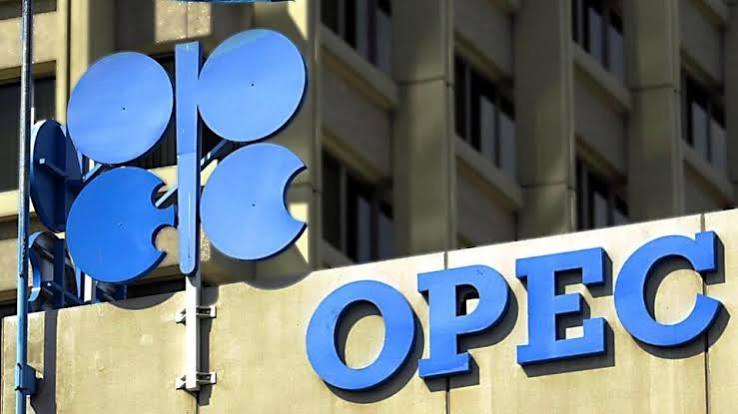
The Organisation of the Petroleum Exporting Countries (OPEC) and its allies, known as OPEC+, have agreed to maintain their oil production targets for November as disruptions from the ongoing Iran war continue to limit actual crude output across the group.
The decision was reached during a virtual meeting involving seven major OPEC+ producers — Saudi Arabia, Russia, Iraq, Kuwait, Kazakhstan, Algeria and Oman.
Nigeria did not participate in the meeting. The country has historically struggled to consistently meet its OPEC production allocation and has therefore focused largely on rebuilding its production capacity and achieving its assigned quota rather than joining the additional voluntary cuts implemented by the seven producers.
In a statement following the meeting, the seven countries said they would retain their September 2026 required production levels for November.
The producers also reaffirmed their commitment to achieving full compliance with the Declaration of Cooperation, the framework through which OPEC+ members coordinate oil production and work to stabilise the global crude market.
The decision was largely anticipated by the market, as producers opted against making further changes to their output plans despite continuing supply disruptions across the Gulf region.
The development comes amid the ongoing impact of the US-Israeli war on Iran, which has disrupted oil exports from several Gulf producers. While crude shipments through the Strait of Hormuz have improved, exports remain below normal levels, leaving actual production significantly lower than official OPEC+ targets.
The difference between production quotas and actual output has widened in recent months. Although OPEC+ has been gradually raising its production targets following years of supply restrictions, disruptions caused by the Middle East conflict have prevented much of the planned increase from reaching global markets.
OPEC data indicated that the seven producers pumped approximately 25 million barrels per day in August, about 630,000 barrels per day higher than their July output. However, the figure remained roughly five million barrels per day below their combined production levels before the Iran conflict began in February.
The supply constraints have helped keep crude prices elevated, with Brent crude trading above $100 per barrel after rising from around $73 before the conflict began.
Higher oil prices and continued uncertainty over supply have also complicated OPEC+ discussions on future production allocations, particularly as the alliance prepares to determine how additional output could be distributed among its members from 2027.
OPEC+ has been reviewing the sustainable production capacity of its members, a process that is expected to play a major role in determining future quotas. However, the assessment has been delayed amid difficulties in determining how much oil individual producers can reliably produce while the conflict continues.
Industry sources cited by Reuters estimate that OPEC+ still has about two million barrels per day in production cuts covering most of its members.
The findings of the capacity review are expected to influence future decisions on production increases and allocations. With the process delayed and uncertainty surrounding members’ production capabilities, major changes to individual quotas are considered unlikely before 2027.
The seven producers are scheduled to meet again on November 1 to assess market conditions and review the outlook for crude supply and demand.
A separate OPEC+ body, the Joint Ministerial Monitoring Committee, also met on Sunday to review developments in the global oil market. However, the committee does not have the authority to set production policy.
With crude prices elevated, physical supply constrained and uncertainty persisting over the duration of the Middle East conflict, the global oil market is expected to remain highly sensitive to developments in the region.